Caring for animals in the North isn’t always easy. When store-bought pet food is unavailable, homemade food can help keep dogs and cats healthy when done as safely as possible. Doing your best with what you have matters.
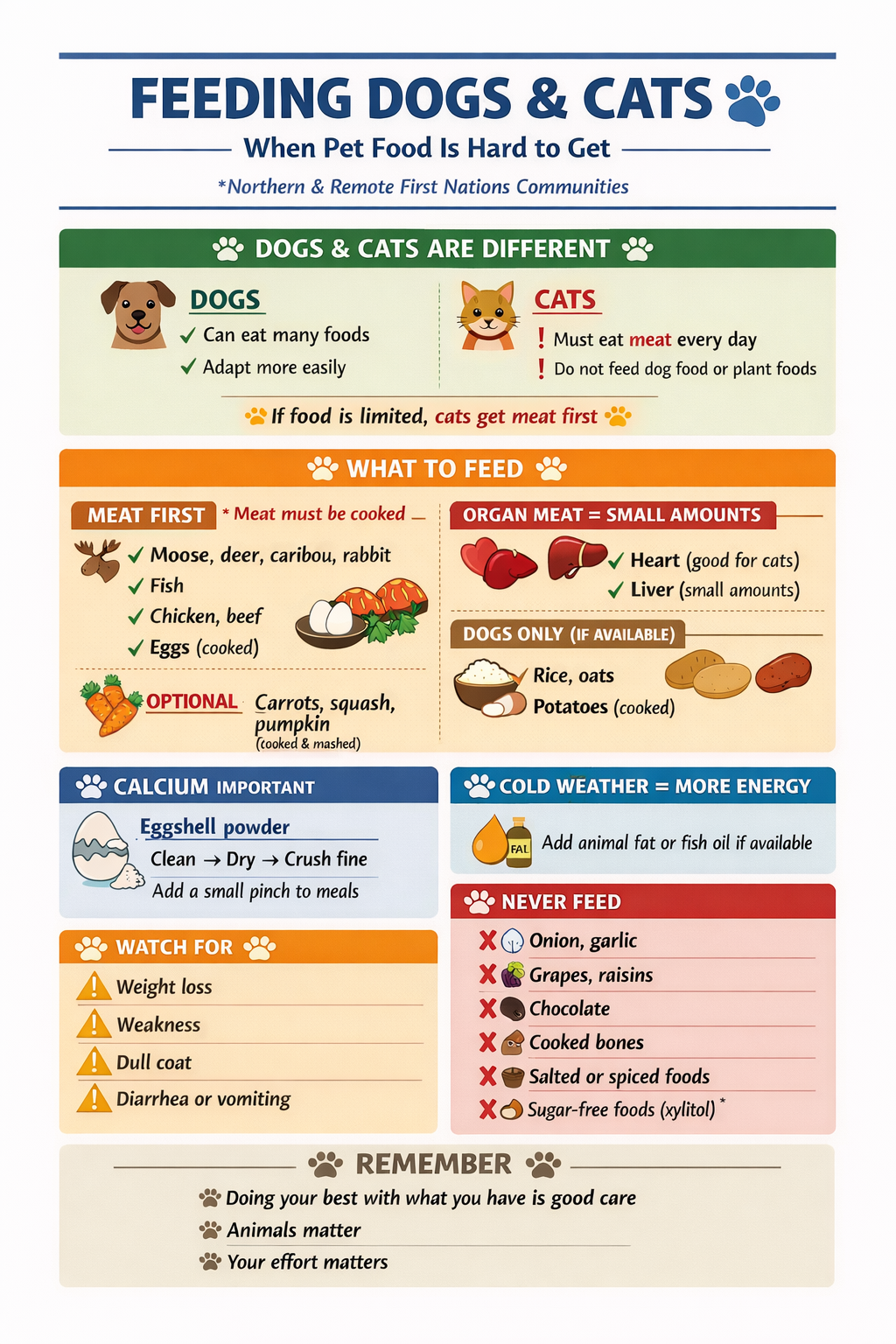
Dogs and Cats Are Different
Dogs
- Can eat a wider variety of foods
- Adapt more easily to homemade meals
Cats
- Must eat meat every day
- Cannot stay healthy on dog food or plant foods
- Need special care when food is limited
If food is scarce, cats should be prioritized for meat.
Core Feeding Rules
- Meat is the most important food
- Feed food plain — no salt, seasoning, onion, or garlic
- Always cook meat to kill parasites
- Fresh water should always be available
Feeding Dogs
A balanced dog meal looks like:
- ½ Meat or Fish
- ¼ Carbohydrates (if available)
- ¼ Vegetables (if available)
- Some Fat
Common Northern Protein Sources
- Moose, deer, caribou, elk, rabbit (well cooked)
- Fish (ALWAYS well cooked to prevent kidney worm infection)
- Chicken, turkey, beef (from store when available)
- Eggs (fully cooked)
- Include organ meat if possible for added vitamins and minerals
Carbohydrates (Helpful but Optional)
- Rice
- Oats
- Potatoes or sweet potatoes (cooked, no green skins)
Vegetables (If Available)
- Carrots
- Squash
- Pumpkin
- Green beans- Cook and mash for easier digestion
Calcium Is Important (Dogs & Cats)
Animals need calcium for strong bones.
Eggshell Calcium
- Rinse eggshells
- Dry completely
- Crush into very fine powder
- Add about ½ teaspoon per pound of food
Feeding Cats (Extra Care Needed)
Cats are natural hunters and must eat meat to survive.
Best Foods for Cats
- Cooked wild game
- Chicken, turkey, beef
- Fish (cooked, small amounts)
- Include organ meat if possible for added vitamins and minerals
Heart meat (very important!)
Heart meat helps provide taurine, which cats need for Vision, Heart health, and the Nervous system. Homemade cat food is safest as a short-term solution when commercial food is not available.
Fat & Energy in Cold Weather
Animals in the North need more calories to help stay warm. When possible, add:
- Animal fat
- Fish oil
- Rendered game fat
- Plant oils
Important: Make sure that you avoid using spoiled or rancid fat in dog or cat food.
Never Feed Dogs or Cats
- ❌ Onions, garlic, chives
- ❌ Grapes or raisins
- ❌ Chocolate
- ❌ Alcohol
- ❌ Cooked bones
- ❌ Heavily salted or spiced foods
- ❌ Sugar-free foods that contain xylitol sweeteners
Signs a Pet May Not Be Getting Enough Nutrition
- 🔻 Weight loss
- 🔻 Low energy or weakness
- 🔻 Dull or thinning coat
- 🔻 Vision problems (especially cats)
- 🔻 Ongoing diarrhea or vomiting
If you notice that your dog or cat might not be getting enough nutrition, seek veterinary care or community support if available.
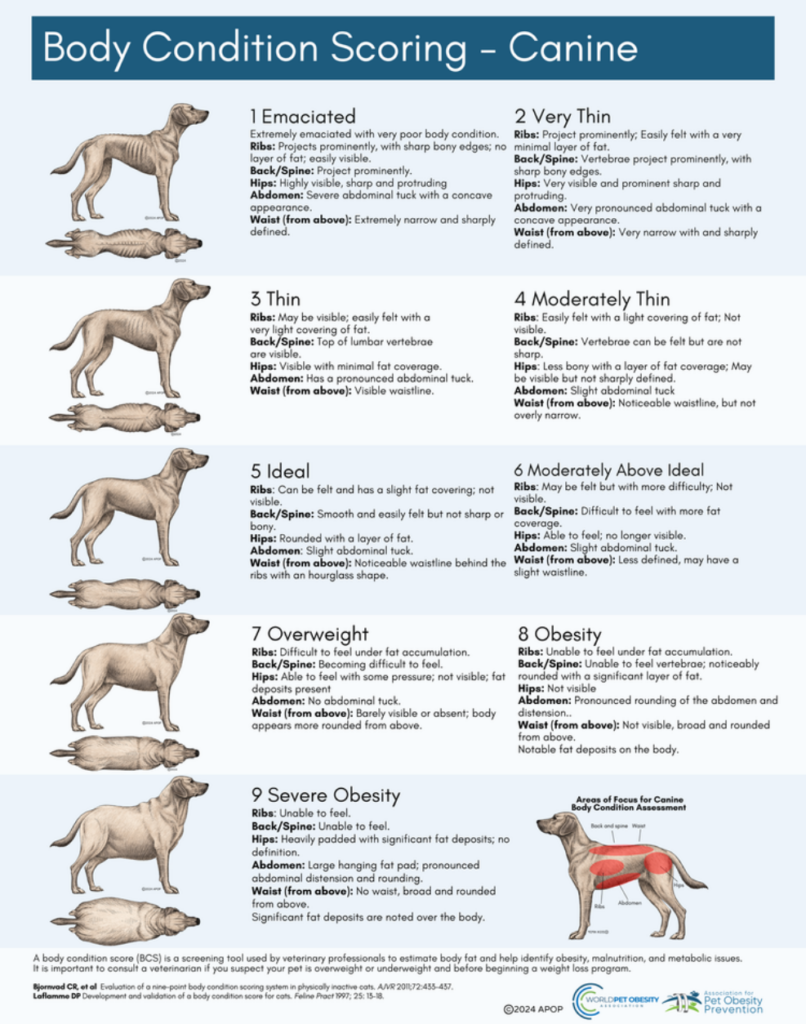
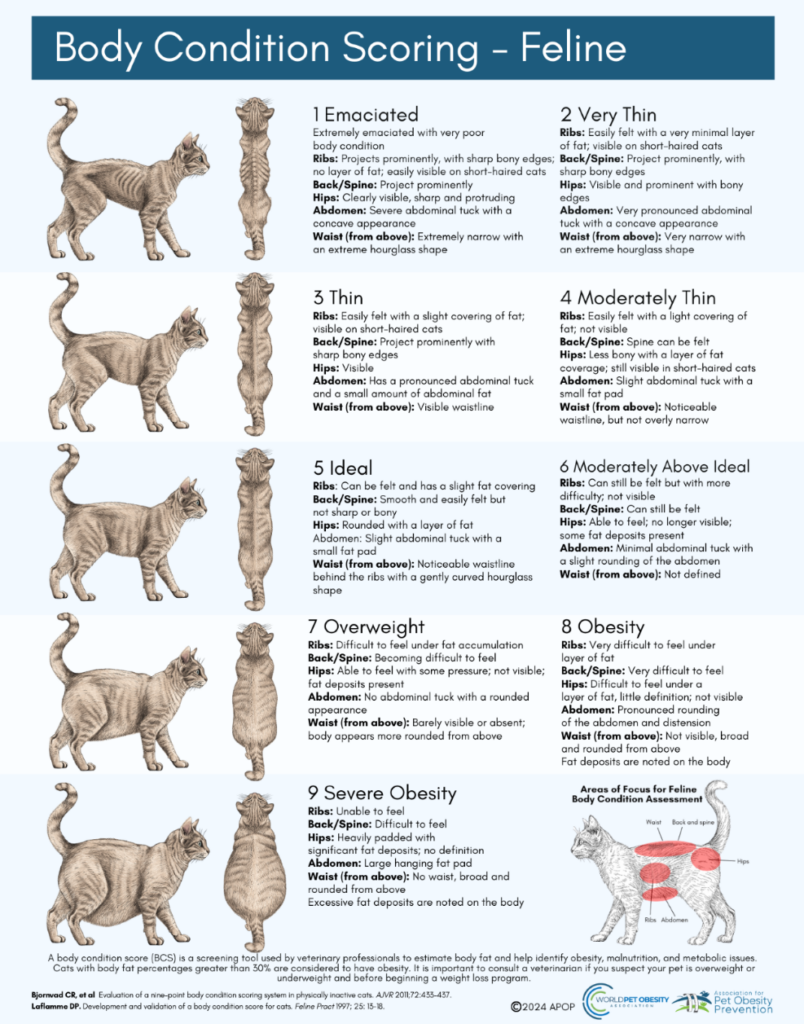
⚠️ Check Your Pet’s Body Condition Score
And always remember…
Feeding animals in the North takes strength, knowledge, and care. Homemade food doesn’t need to be perfect — it needs to be safe. It’s ok to ask for help. Your effort matters. Your animals matter.
Additional Resources:
Play a classroom KAHOOT based on this article: Click Here!