
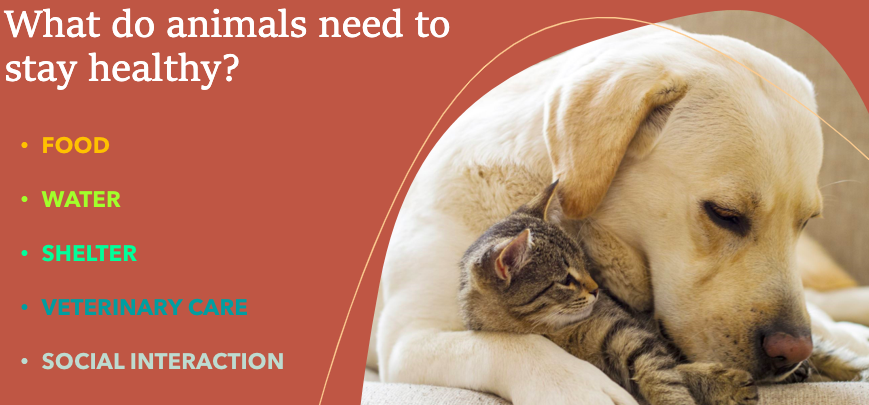
Animals have basic needs that we can help provide to keep them healthy and happy. These include:
- proper nutrition
- fresh water
- daily exercise
- shelter
- social interaction
- companionship
- regular visits to the veterinarian.
Signs of Healthy Animals
When animals are healthy, we can usually tell by looking and listening. They often have:
- A shiny coat
- clean white teeth
- clear eyes and ears
- show normal behaviours like walking, running, sleeping well, and wagging their tails with excitement.
- They maintain a steady weight
- have a good appetite
- go to the bathroom regularly.
- When we listen closely, we should hear a normal heartbeat and breathing sounds
- typical vocalizations like barks or howls—without coughing or sneezing.
Signs of Un-healthy Animals:
When animals aren’t feeling well, there are often physical and behavioural signs that can help us recognize something is wrong:
Physically, you might notice dull or greasy fur, laboured or rapid breathing, coughing, sneezing, excessive itching or scratching, vomiting, diarrhea, or crusty discharge around the eyes, nose, or ears.
Behaviourally, animals may show changes such as lethargy, restlessness, loss of appetite or increased hunger, hiding, fawning for attention, or even self-harming behaviours. Pain can also lead to more specific changes like limping, guarding a certain body part, avoiding grooming, changes in facial expression (like wide eyes or ears pulled back), increased vocalizations like barking or whining, sudden aggression or personality shifts, and a refusal to move or play.
Just like people, animals can experience pain from things like infections, dental issues, joint problems, or even cancer. Because they can’t tell us what’s wrong, it’s important to pay attention to signs that something isn’t right—whether it’s a change in how they look, act, or sound.
By recognizing these signs early and speaking with a veterinarian or other animal care professional, we can make sure animals get the help they need. Veterinarians play a key role in keeping animals healthy by diagnosing and treating illness, performing checkups, providing medications, researching better care methods, and teaching others how to protect animal well-being. Working together, we can help animals live longer, healthier, and happier lives.
Additional Resources:
Play a classroom KAHOOT based on this article: Click Here!